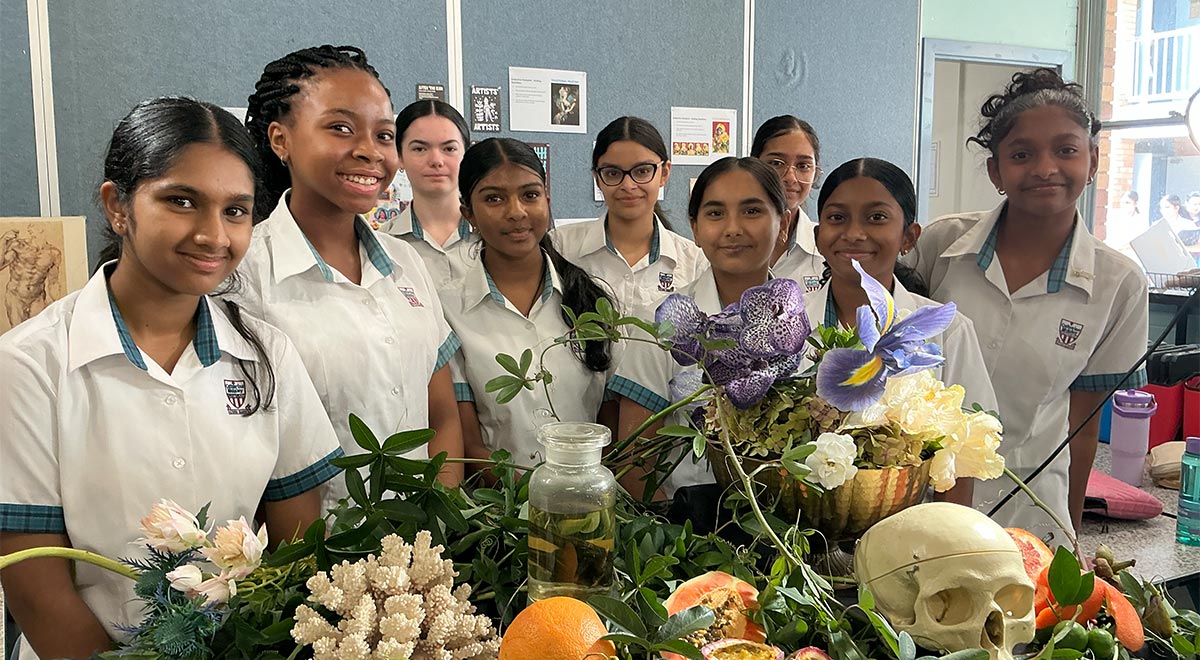
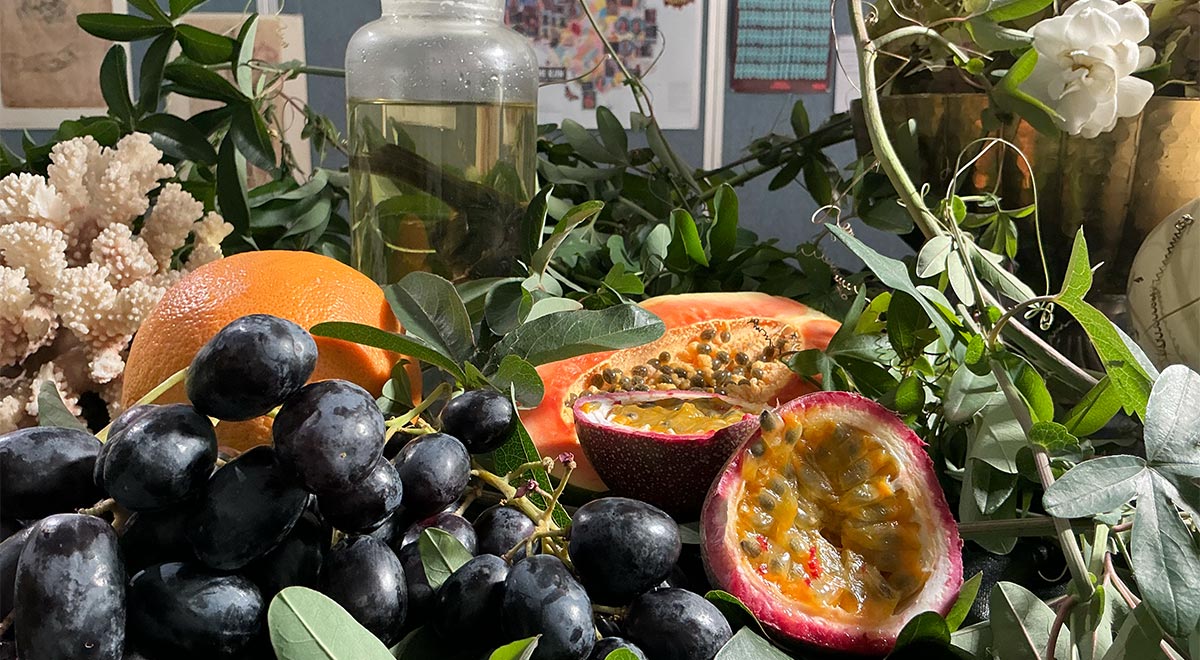
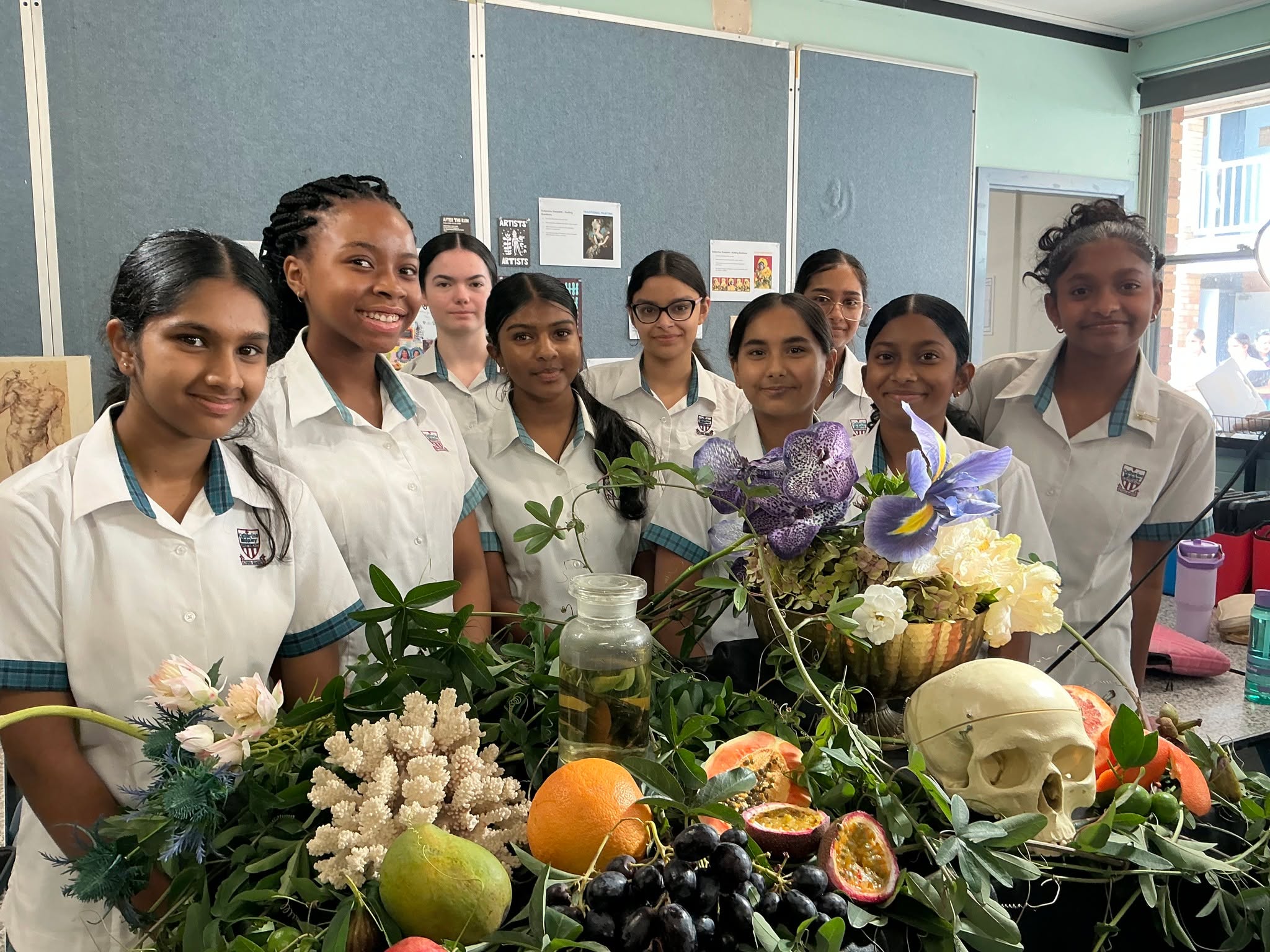
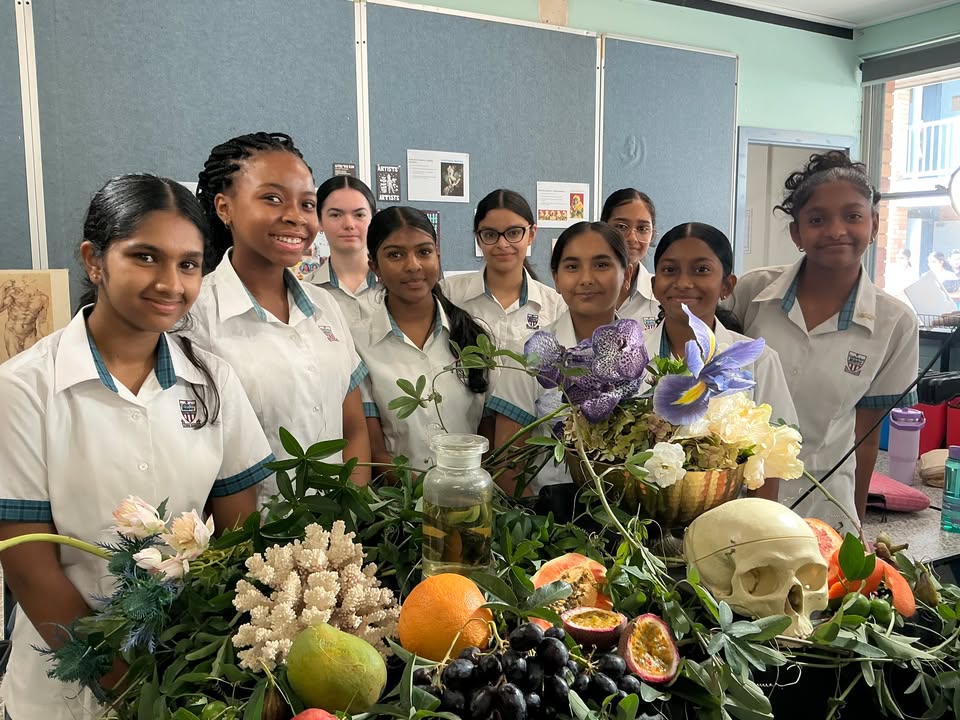
Year 9 Visual Arts students have put together an arrangement that embodies the concepts of memento mori and vanitas.
Year 9 student report on work in Visual Arts so far this year.
Year 9 Visual Arts students have had a busy start to the year as they look at observational drawing and still life. Year 9 student Jenolin P. from 9VART.1 and Visual Arts Teacher Mrs E. Langbein-Pass have written a report about their work so far:
In the first few weeks of elective Art, my Year 9 class has been exploring the theme ‘Beauty and the Beast’ through observational drawing and still life studies. We began by sketching flowers and natural forms, focusing on line, tone, and detail, and are now preparing to create a coloured pencil drawing as our main medium, which will continue into Term 2. Throughout the unit, we have studied artist examples such as Still Life on a Windowsill (c. 1685) by Rachel Ruysch, a work from the Dutch Baroque period, to understand how composition, light, and symbolism can communicate deeper meaning and how this resonates with our own perspectives.
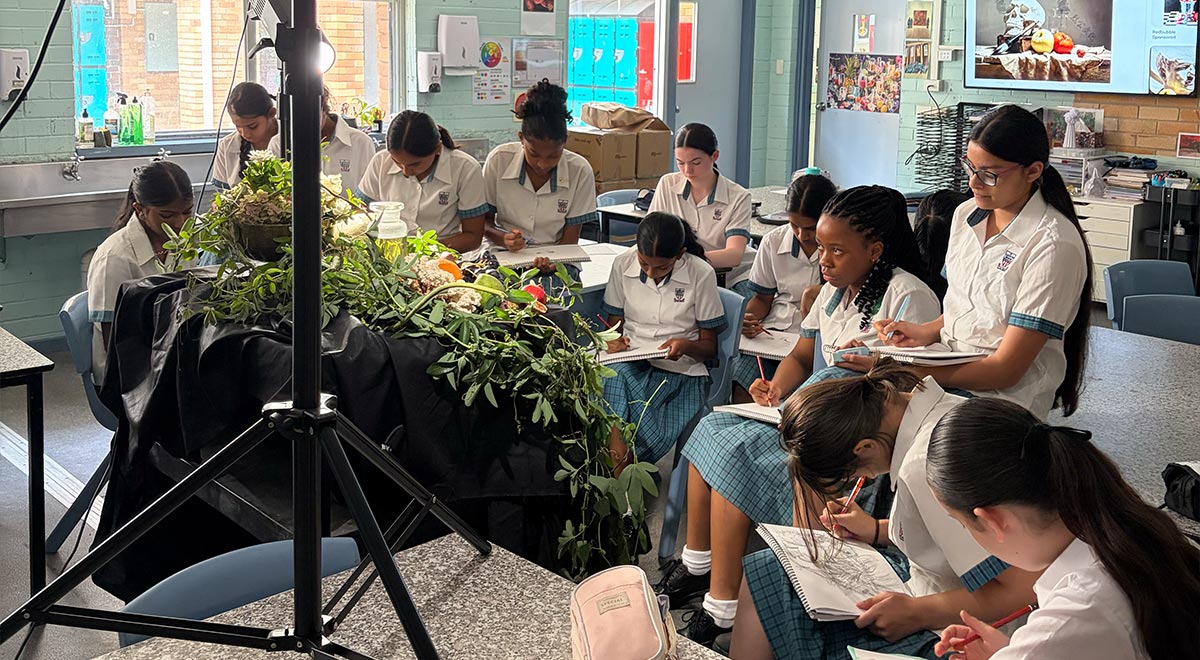
Our elective class has been highly collaborative, sharing ideas and creative insights while responding in diverse and thoughtful ways to the same still life set-ups. Recently, we worked with an intricate and visually striking arrangement that embodied the concepts of memento mori and vanitas. Memento mori, meaning ‘remember that you must die’, is a symbolic reminder of the inevitability of death, while vanitas refers to the fleeting nature of life, beauty, and material possessions. These ideas are often represented in still life artworks through objects such as wilting flowers, insects, or decaying forms, encouraging viewers to reflect on the passage of time and the temporary nature of existence.
For me, these concepts emphasise the importance of savouring moments and appreciating objects that hold life, detail, and meaning. Capturing these ideas through still life compositions has helped me connect more deeply with our theme, Beauty and the Beast. Through this experience, I have been encouraged to find beauty not only in elegant flowers, animals, objects, and patterns, but also in flawed and unconventional forms such as beetles, unusual objects, and imperfect textures. This process has helped us understand how beauty and darkness can coexist, and how art can challenge traditional ideas of what is considered beautiful.
Thank you to Mr G. Johnson, Leader of Learning Science, for providing some of the curious objects - the scull, coral and jar specimen.
Jenolin P. from 9VART.1 and Visual Arts Teacher Mrs Langbein-Pass
Catherine McAuley Westmead
More News
12 Feb 2026
From Facebook
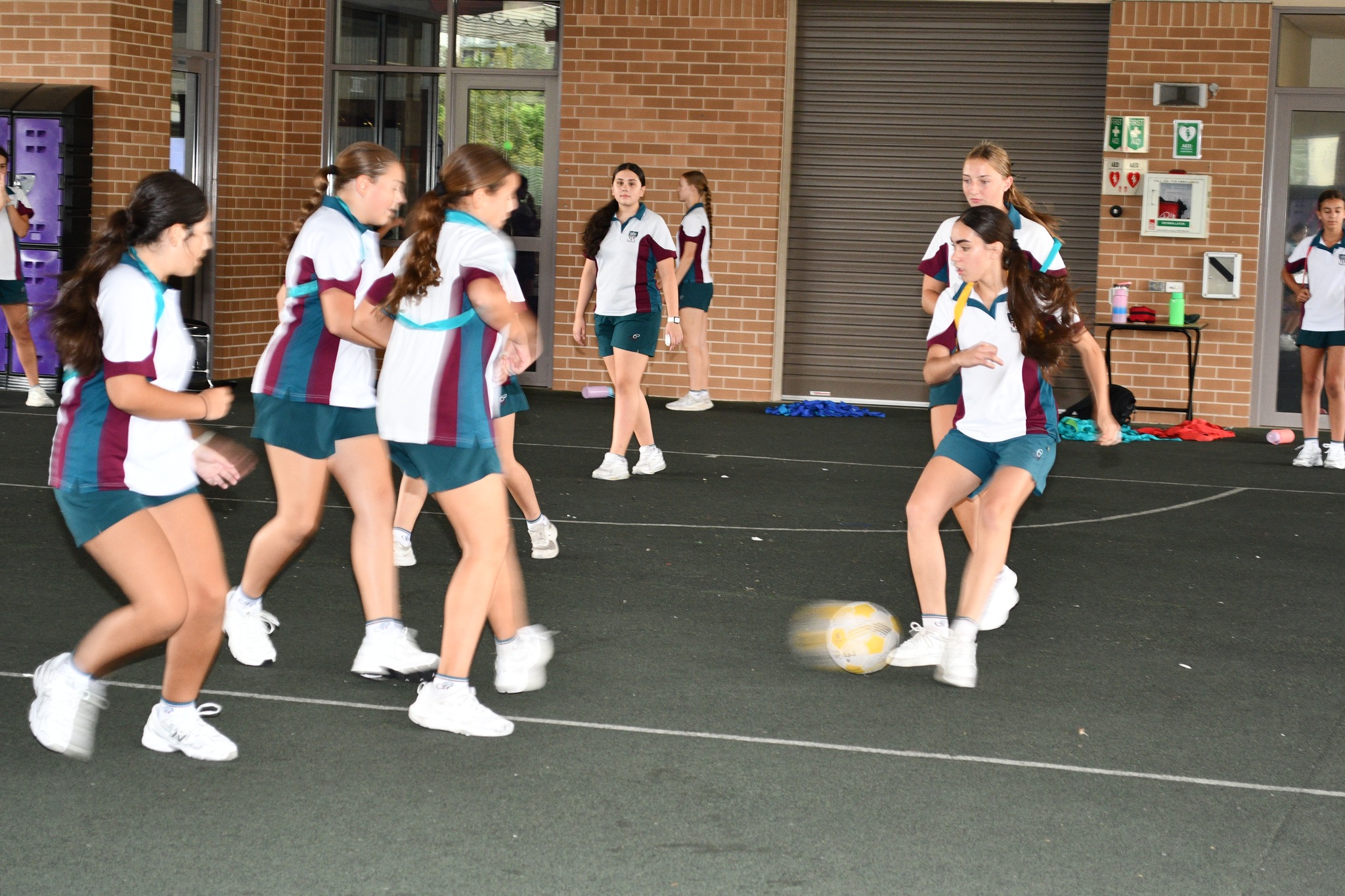
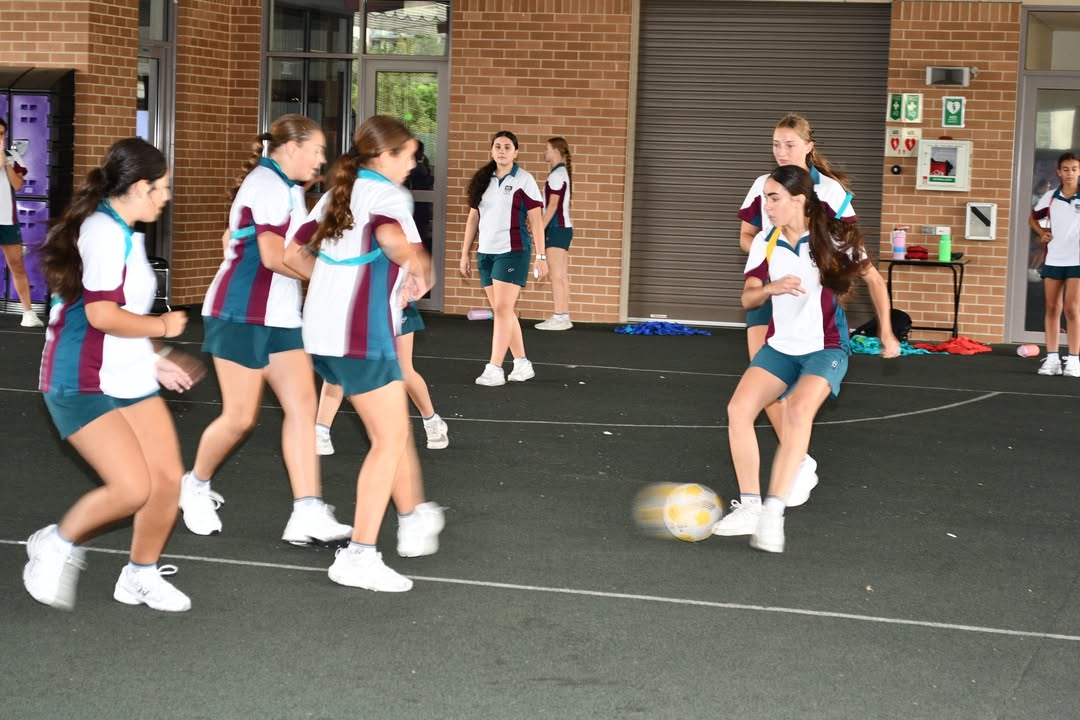
THURSDAY AFTERNOONS AT McAULEY 😃 A busy afternoon around the school! Year 7 students meet with their Year 10 Peer Mentors for their first session of the year, kicking things off with getting-to-know-you games and learning how to use their planners and read their timetables. Next week the focus turns to staying organised, with mentoring sessions continuing every Thursday across Terms 1 & 2. Elsewhere, students were kept busy with sport and dance - Wanderers 5s Team trials were underway, and Year 8 enjoyed Matball and Just Dance. Plenty of activity all around the school! ⚽ 💃
12 Feb 2026
From Facebook
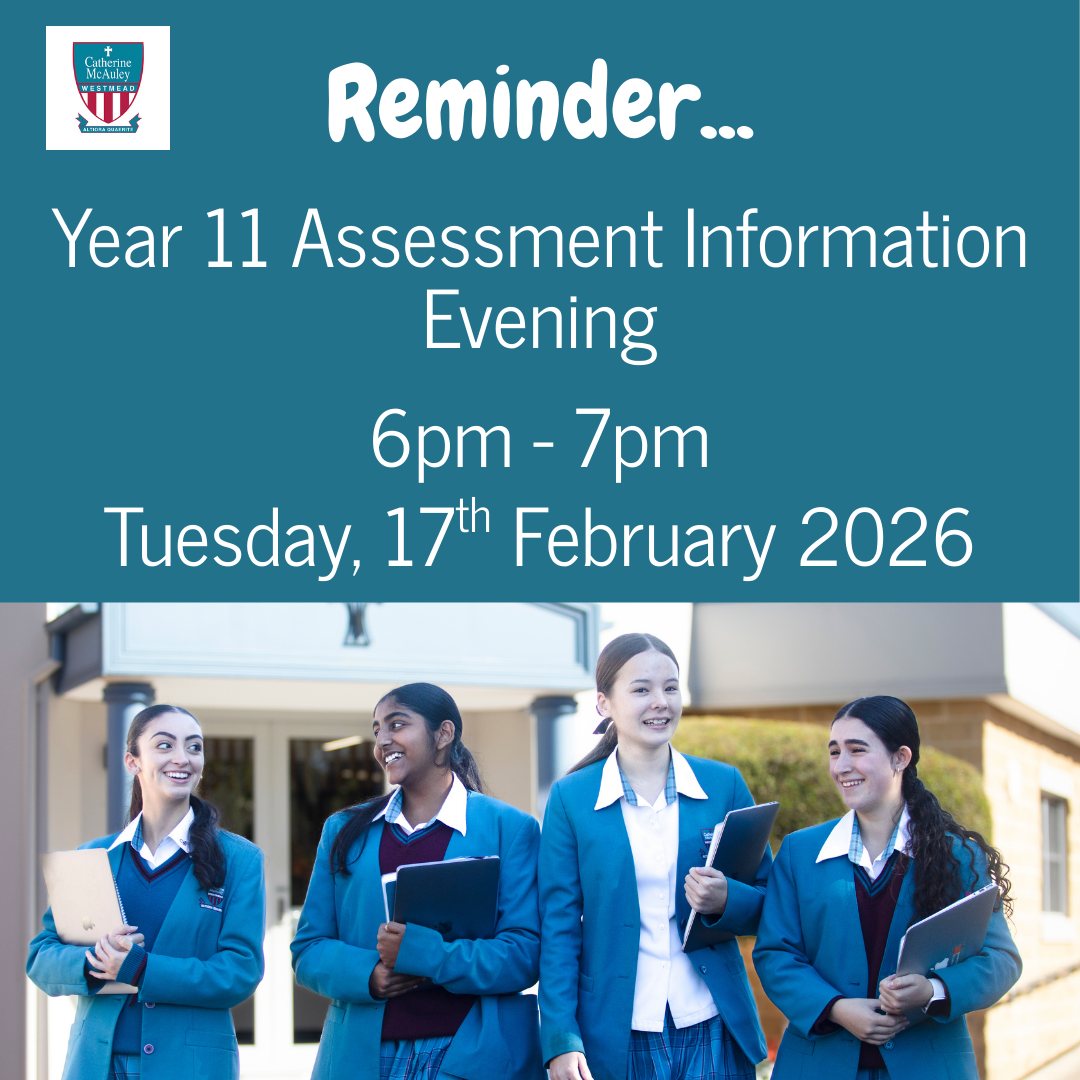
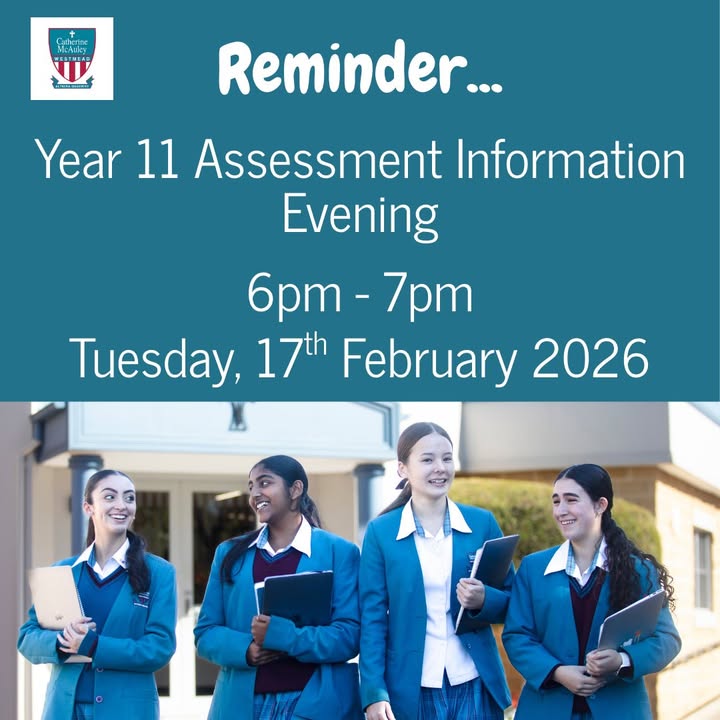
REMINDER ‼️ A reminder for Year 11 parents and students that the Year 11 Assessment Information Evening is next week at 6pm - 7pm on Tuesday, 17th February 2026. This is an important moment in the senior learning journey for Year 11 students and will help make expectations clear and opportunities visible for both students and families as they begin this next stage of schooling. All students and at least one parent or carer is expected to be present for this session.
12 Feb 2026
From Facebook
AROUND THE CLASSROOMS ➡ Year 9 elective Art students are exploring the theme Beauty and the Beast through detailed observational drawing and still life studies. Beginning with sketches of flowers and natural forms, students focus on line, tone and texture, and are now preparing a coloured pencil artwork that continues into Term 2. Inspired by Dutch Baroque still life works, including Rachel Ruysch’s Still Life on a Windowsill, students examine how artists use light, composition and symbolism to express deeper meaning. A recent collaborative task features an intricate still life arrangement exploring the ideas of memento mori and vanitas, encouraging reflection on time, beauty and the fleeting nature of life. 🌹 🍇 Through this process, students are challenged to find beauty in both elegant and unconventional forms, appreciating detail, imperfection and contrast, and discovering how art can push us to rethink what we consider beautiful. 🖼️ 🎨
12 Feb 2026
From Facebook
The Catherine McAuley Westmead Weekly Review for Thursday 12th February 2026 is now available:
12 Feb 2026
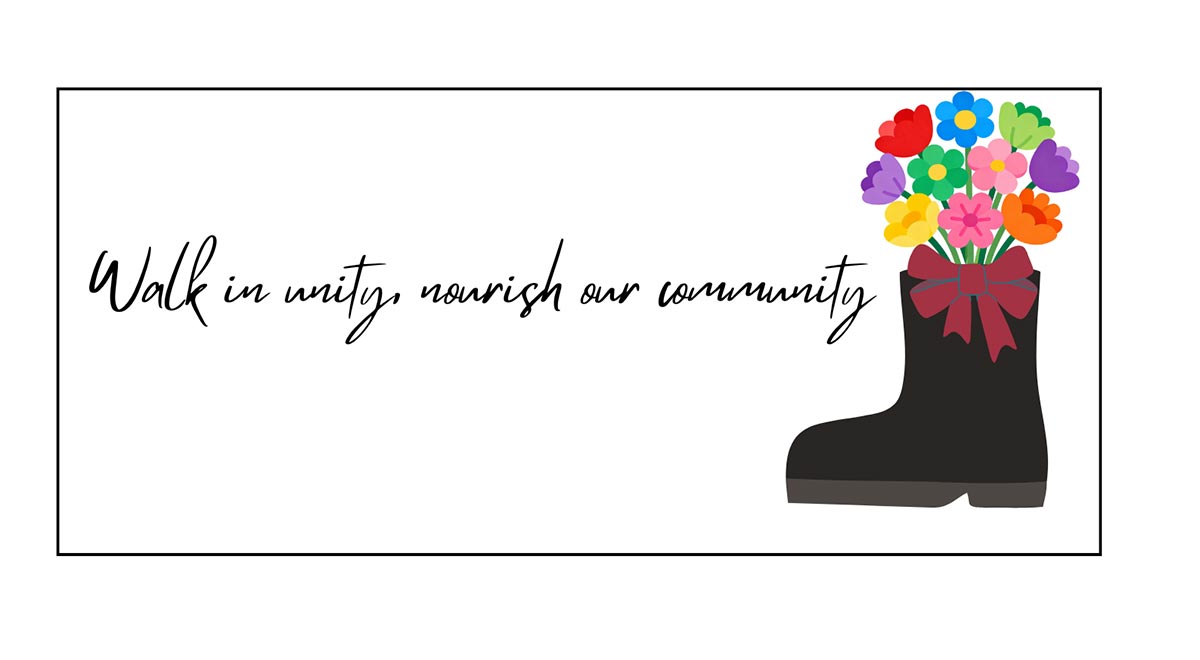
Theme for 2026 - Walk In Unity, Nourish Our Community
A reminder of the school theme for 2026 - Walk In Unity, Nourish Our Community
12 Feb 2026
Year 9 Visual Arts Students Explore ‘Beauty and the Beast Theme’
Year 9 student report on work in Visual Arts so far this year.
11 Feb 2026
From Facebook
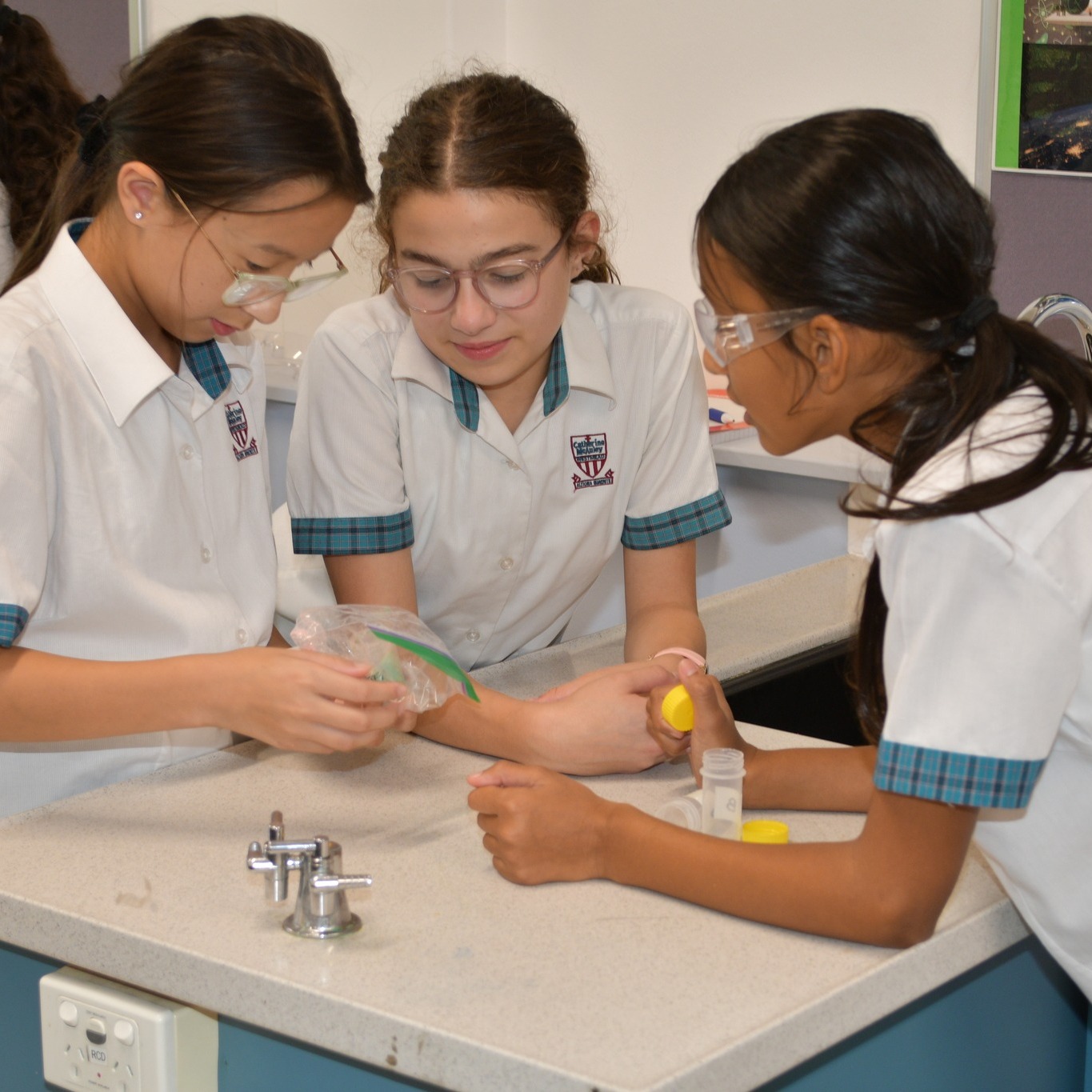
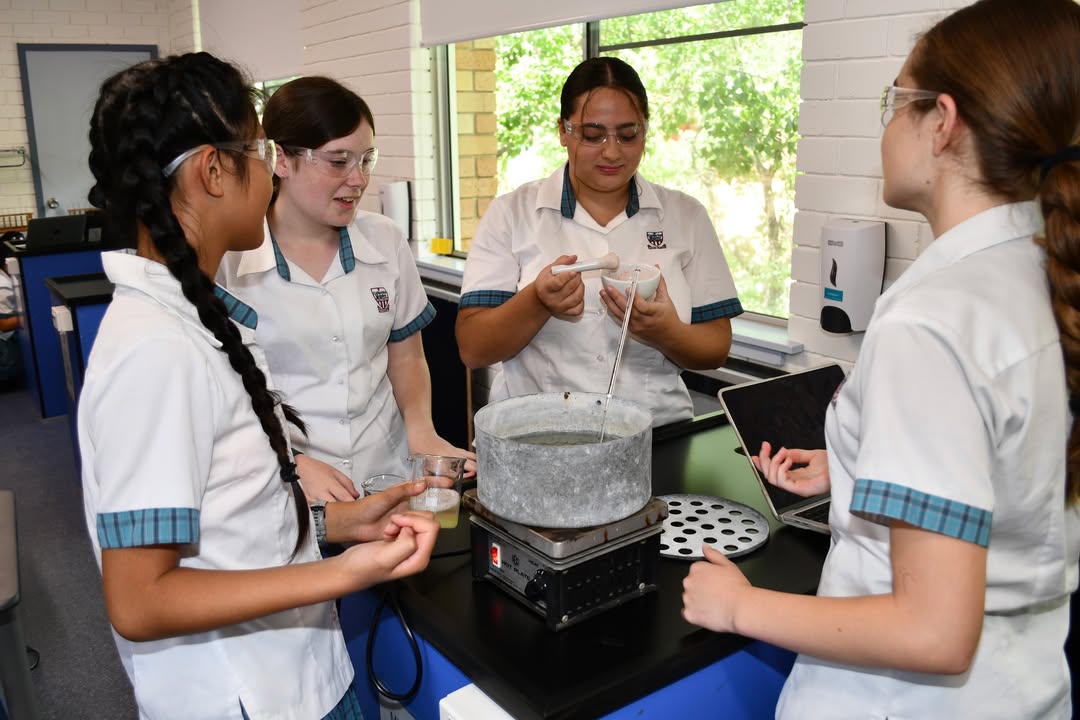
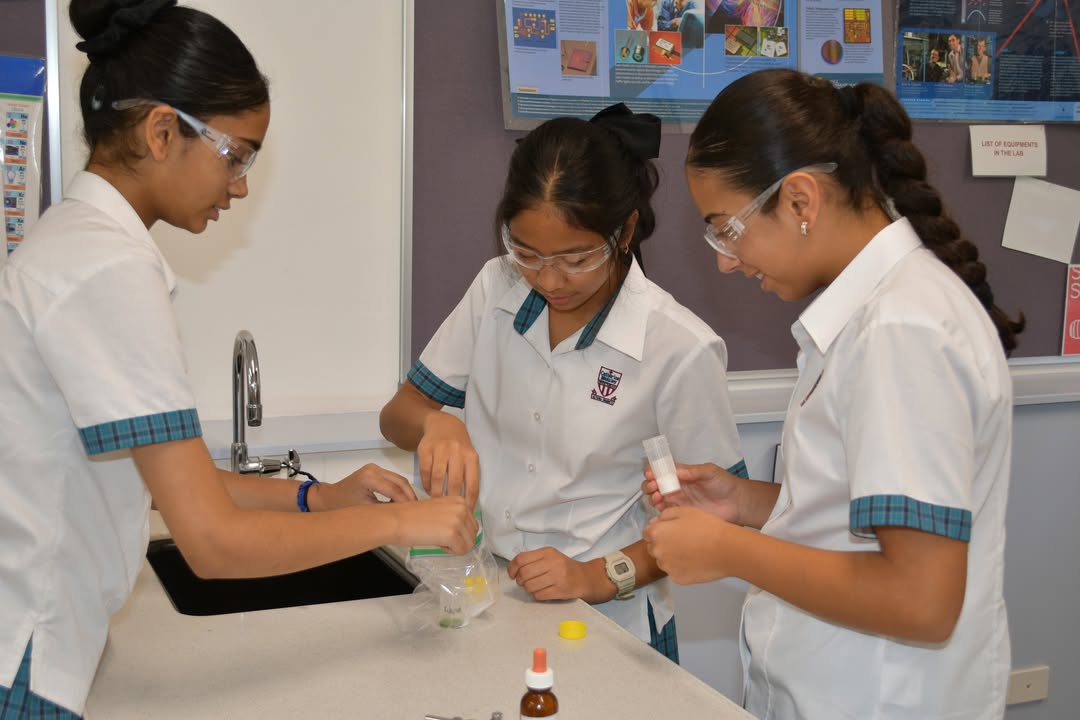
AROUND THE CLASSROOMS - Year 10 students with Mrs S. Bain were hands-on in class today, extracting DNA from strawberries. 🧬🍓
11 Feb 2026
From Facebook
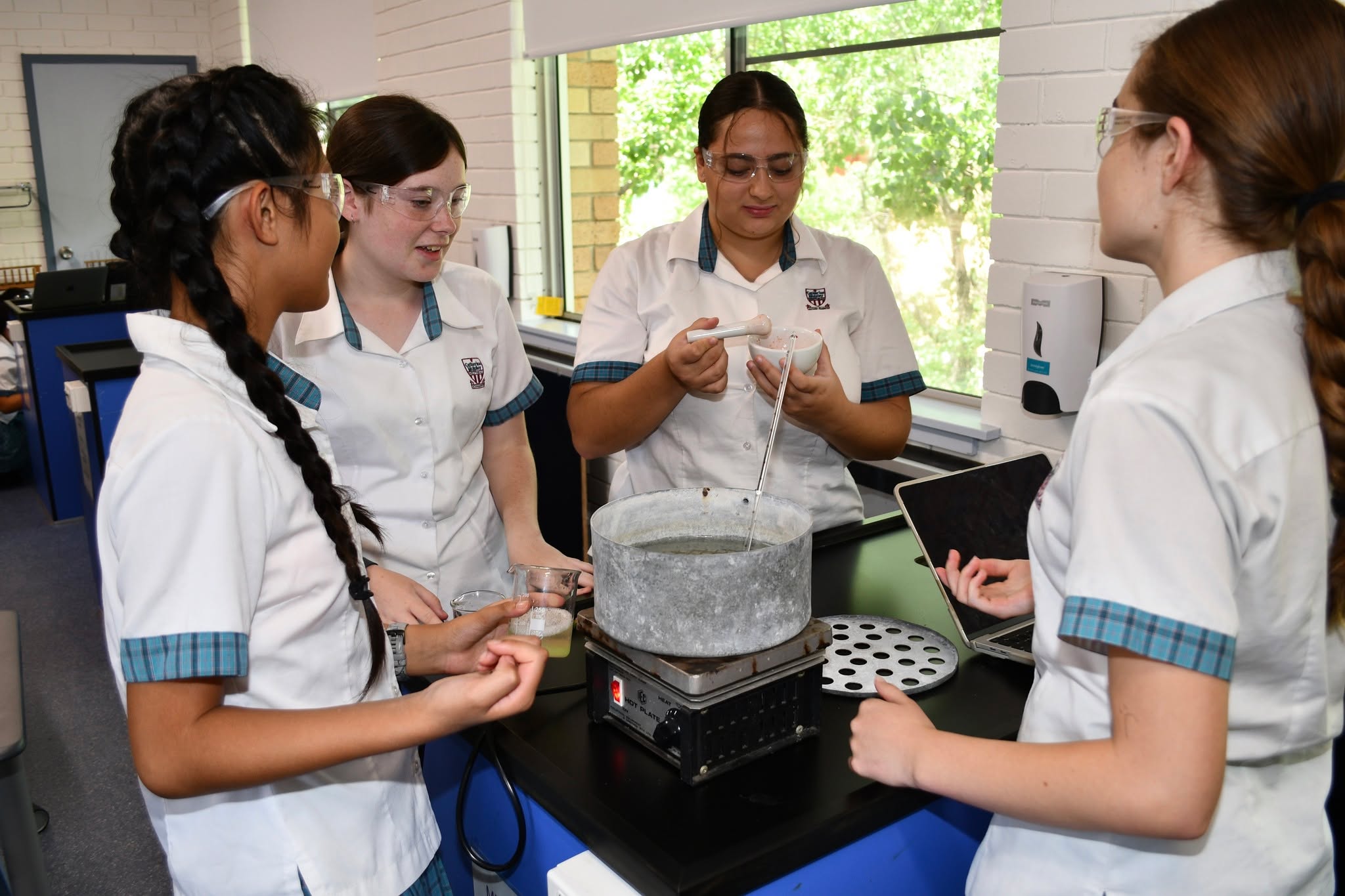
AROUND THE CLASSROOMS ➡️ Year 7 students with Mr G. Johnson were busy making observations about a chemical reaction today. The colour change in their experiment was a highlight, and students were excited to record their discoveries in their workbooks. A great mix of curiosity, science, and hands-on learning. 🧪 📘
10 Feb 2026
From Facebook
CLASS OF 2023 😀 Apologies for the delay...the Yearbook for 2023 is now available. Feel free to come to the school to collect a copy. You may pick up extra copies for your friends or ask your sister to collect a copy if she is a current student at the school. The 2024 Yearbook is currently at the printers and will be available soon and the 2025 Yearbook will be available later in the year.
10 Feb 2026
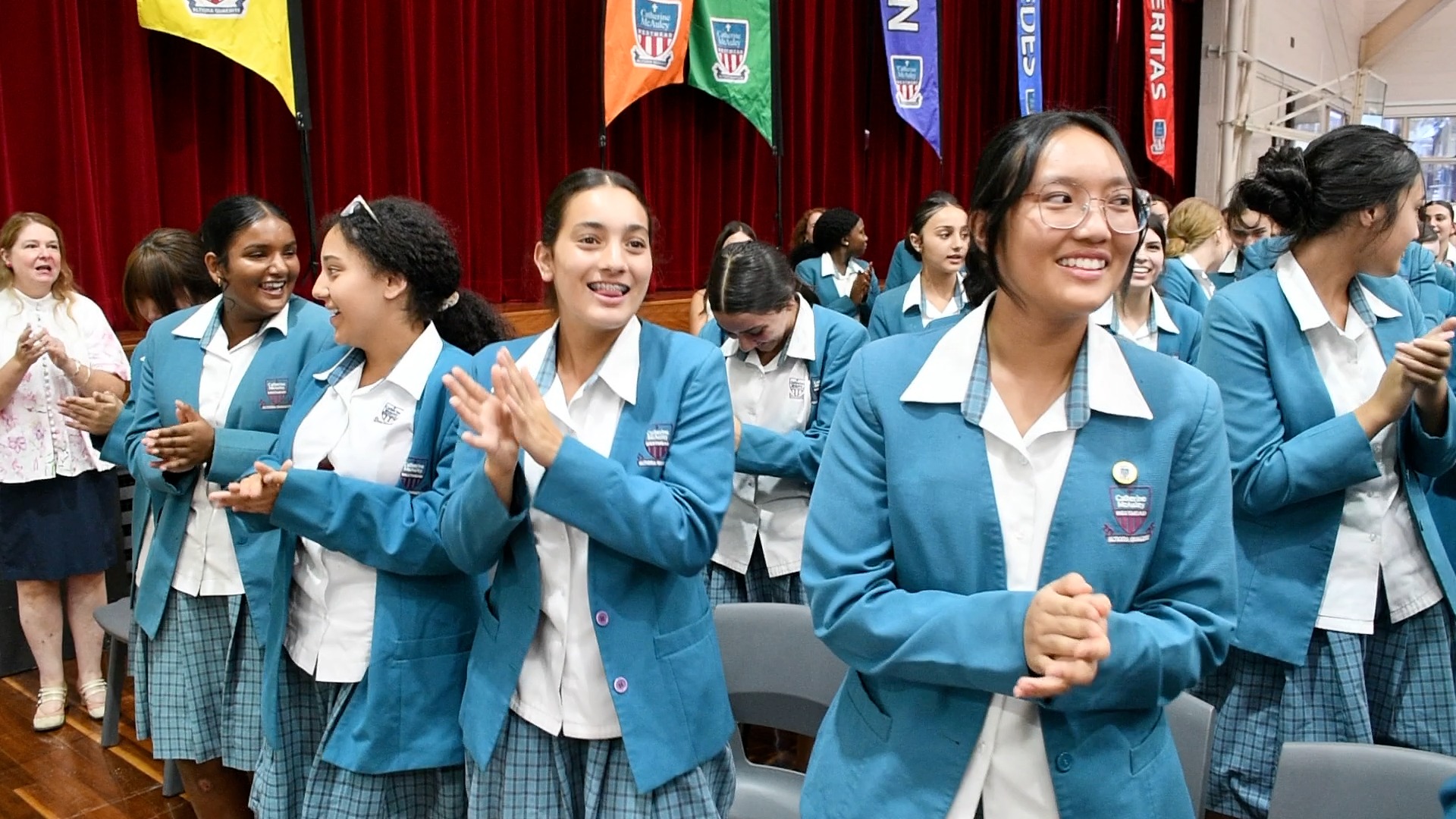
School Community Gathers Together To Celebrate The Beginning Of The New School Year
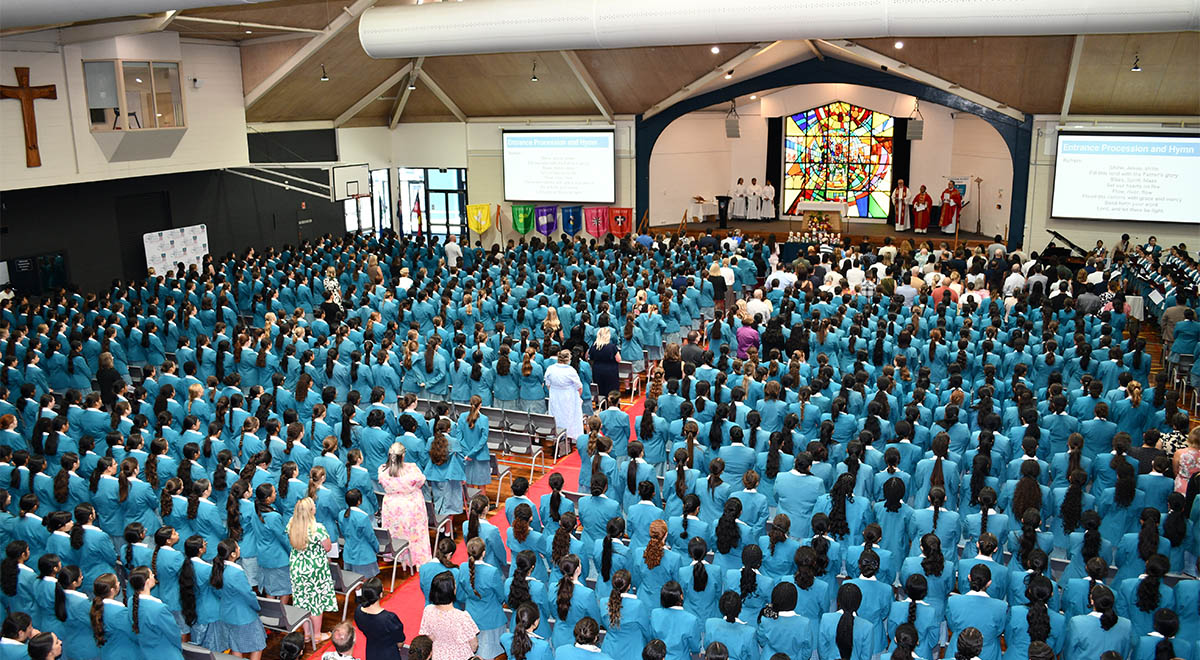
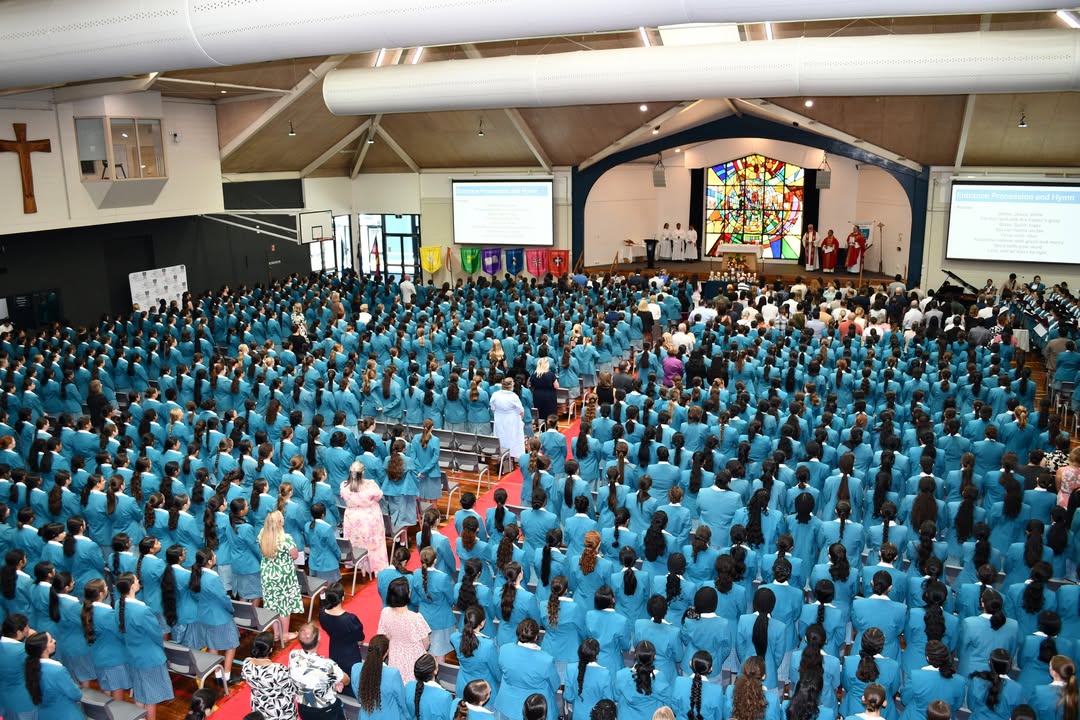
Over 1500 students, staff, parents, grandparents, carers and special guests gathered in The Morley Centre for the 2026 Opening School Mass.
10 Feb 2026
Choosing a School: A Guide for Parents
Choosing a school is a big moment. Right up there with choosing a pram, a first pet or agreeing to sign your child up for weekend sport for the next decade. It’s completely normal to feel overwhelmed, but take a breath. This guide is here to make the process feel lighter, clearer and a lot less daunting, so you can feel confident you’re asking the right questions and find a school that truly fits your child for any grade.
08 Feb 2026
From Facebook
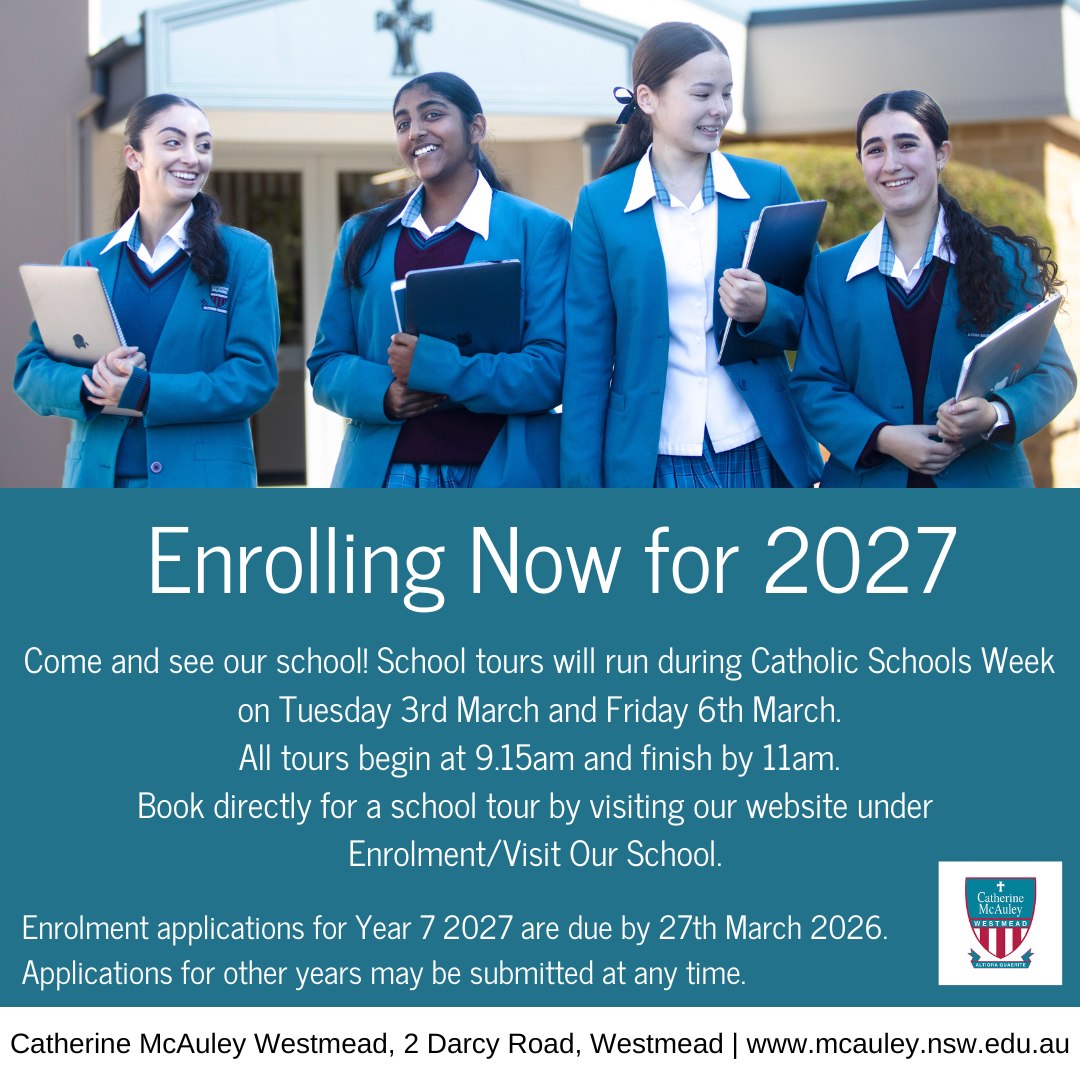
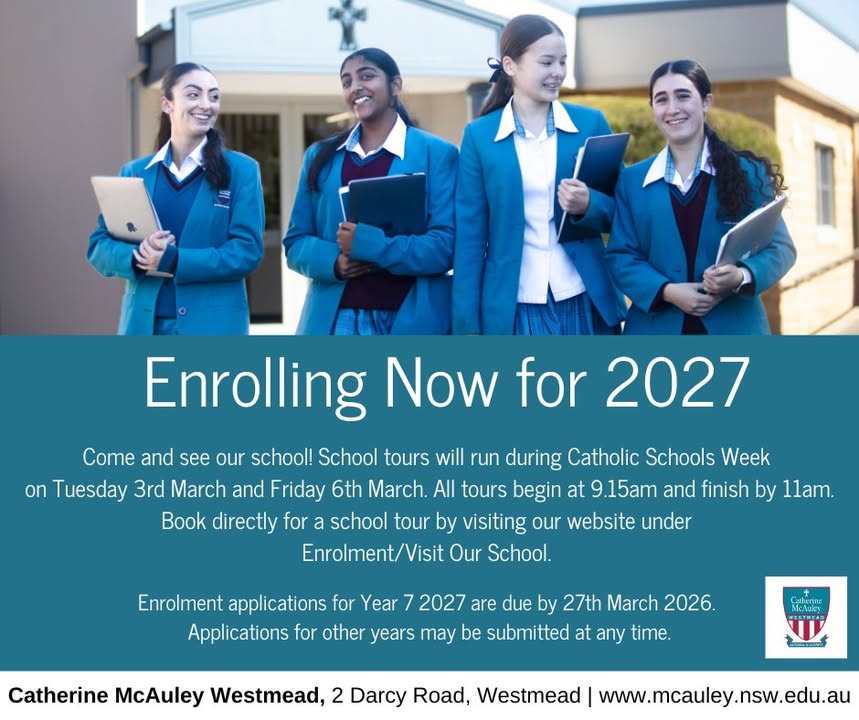
CATHERINE McAULEY WESTMEAD IS ENROLLING NOW! ‼️ Catherine McAuley Westmead is enrolling now for 2027. Come and see our school during Catholic Schools Week by booking for a school tour via our website (Enrolment/Visit Our School). We look forward to welcoming you! 🥰
06 Feb 2026
From Facebook
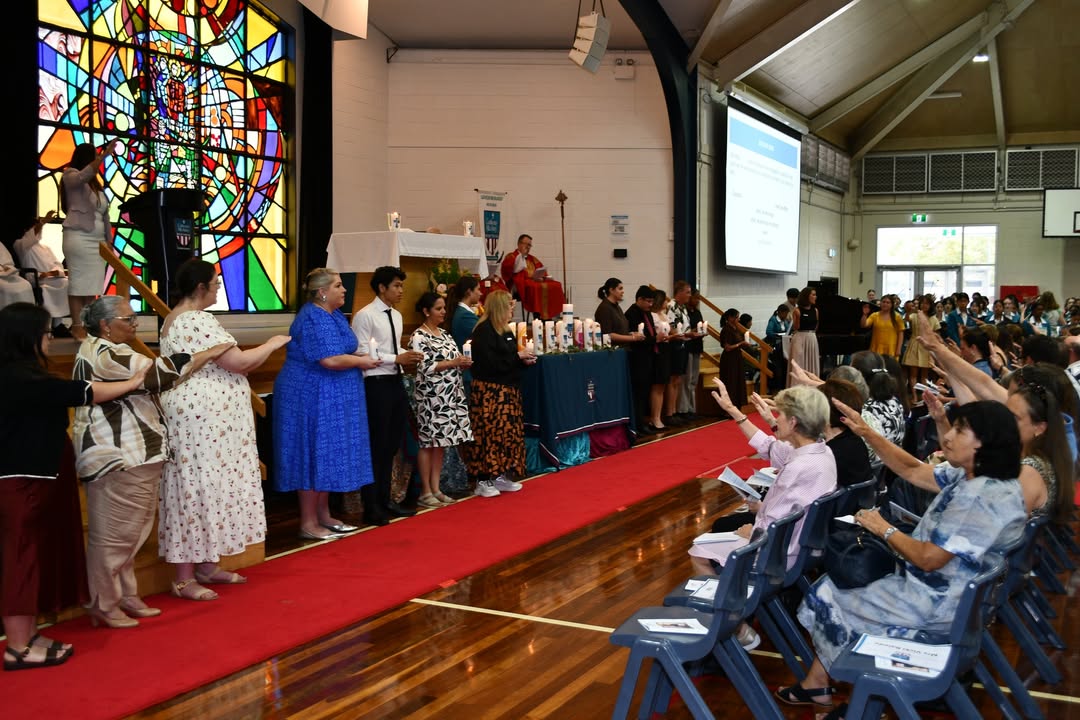
OPENING SCHOOL MASS ✝ New staff were commissioned today at the Opening School Mass. All new staff received a Staff Candle, which was lit by the School Captains from the School Candle. The new staff members then joined with the Year 7 students in forming a circle of mercy around the Morley Centre.
06 Feb 2026
From Facebook
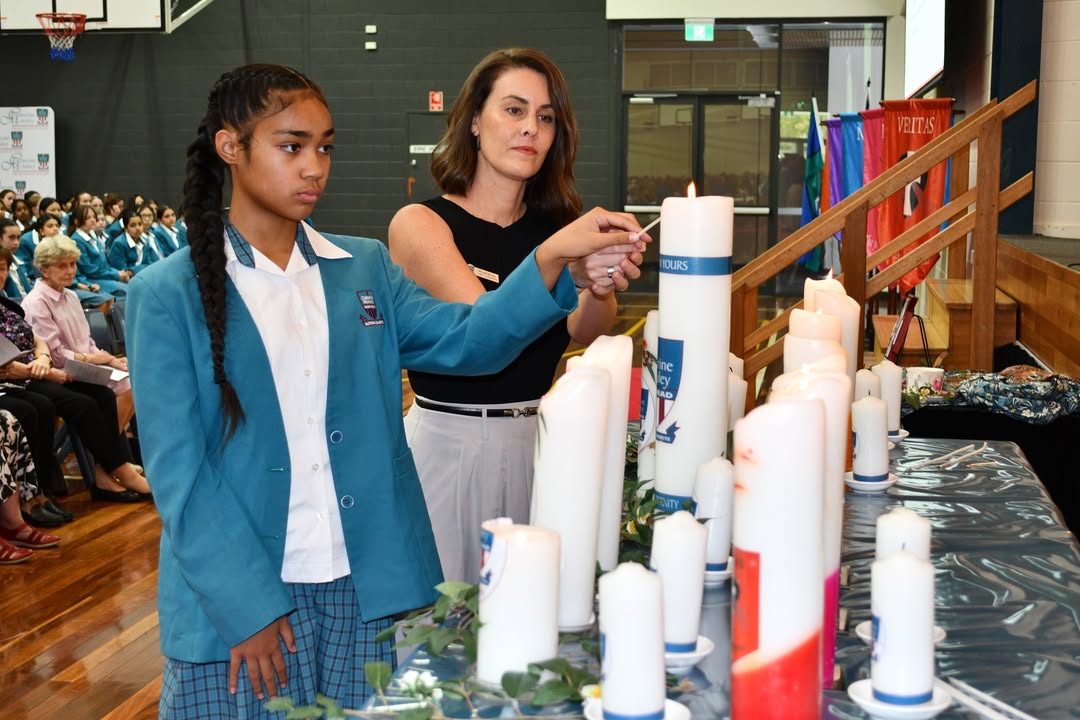
OPENING SCHOOL MASS ✝ Today at the Opening School Mass the Year 7 candle was lit for the first time with Year 7 student Mercedes joining with Ms L. Morrison, Year 7 Leader of Wellbeing, to light the candle. This candle symbolises Christ’s presence amongst the Year 7 group - a candle that will accompany them throughout their time at the school. 🕯 Year 7 students were also presented with their school bibles which they will use during their time at Catherine McAuley.
06 Feb 2026
From Facebook
OPENING SCHOOL MASS ✝ The whole school community gathered together today as a Mercy Catholic Community to ask for God’s blessing for the new school year. The Opening School Mass was also an opportunity to welcome all new members and commission the new student leaders. It was wonderful to see so many parents, grandparents and carers join the school in this celebration with over 1500 gathered in the Morley Centre today! Thank you to Most Rev. Vincent Long Van Nguyen, OFM. Conv DD STL, Bishop of the Diocese of Parramatta; Very Rev Father Robert Riedling, Dean and Administrator of Parramatta Cathedral, Episcopal Vicar for Education; and Rev Father Walter Fogarty, Coordinating Pastor of Westmead Catholic Community for celebrating the Mass.